 Indian Masala Chai
 English Breakfast Tea
 Salaam Sulaimani
 Earl Grey
 Assam Afternoons
 Rosé Darjeeling
 Herbal Tea
 Vayu Brew Nest Mug
 Vayu Golden Haven (Pack of 2)
 Vayu SteepEase
 Vayu Nirvana Tea Pot
 Golden Brews Gift Set
 The Royal Collection
 Emerald Collection
 The Calming Collection
 Vayu’s Trial Pack (Loose Tea)
 Masala Chai (Tea Premix)
 Adrak Chai (Tea Premix)
 Elaichi Chai (Tea Premix)

Immunity is not built in a single day. It is built slowly, through consistent habits — sleep, food, movement, and the small decisions that compound over time.
Tea, on its own, does not prevent illness. But certain herbs — taken regularly — support the systems that keep the body resilient. The distinction matters: not a cure, but a contribution.
The Ingredients Worth Understanding
Turmeric Curcumin, the active compound in turmeric, is one of the most studied botanical ingredients in modern wellness research. Its anti-inflammatory properties are well-established — chronic low-level inflammation is linked to a wide range of health issues, and curcumin works to moderate it.
One caveat: curcumin has low bioavailability on its own. It is absorbed significantly better when combined with black pepper (which contains piperine) or with fat. In a tea context, adding a small amount of honey and a pinch of pepper to a turmeric blend improves what your body actually takes in.
Fennel Fennel is a traditional digestive aid — it helps reduce bloating, supports gut motility, and has mild antimicrobial properties. A healthy gut is deeply connected to immune function; the gut lining houses a significant portion of the body's immune cells.
In the cup, fennel adds a light anise-like sweetness that balances the earthiness of turmeric.
Moringa Moringa leaf is one of the most nutrient-dense plant ingredients available — rich in vitamins A, C, and E, as well as iron and calcium. Vitamin C is directly involved in immune cell production. Vitamin A supports the integrity of mucous membranes — the body's first barrier against pathogens.
As a tea, moringa is mild and grassy. It is not a strong flavour, but it is a consistent source of micronutrients in a form the body absorbs readily.
Ginger Ginger's role in immunity is primarily through its anti-inflammatory and antimicrobial compounds — gingerols and shogaols. It supports circulation, warms the body, and aids in the clearance of respiratory congestion.
It is also one of the most bioavailable herbal ingredients — meaning the body uses it efficiently with no need for special preparation.
Ashwagandha The connection between stress and immunity is direct: elevated cortisol suppresses immune function. Ashwagandha's role as an adaptogen — moderating the stress response over time — has an indirect but meaningful effect on the body's ability to defend itself.
Chronic stress is one of the most significant contributors to immune vulnerability. Addressing it is as much a part of immunity as vitamins.
Building the Habit
No single cup changes immune health. A consistent daily practice — one cup of a thoughtfully chosen herbal blend, across weeks and months — does.
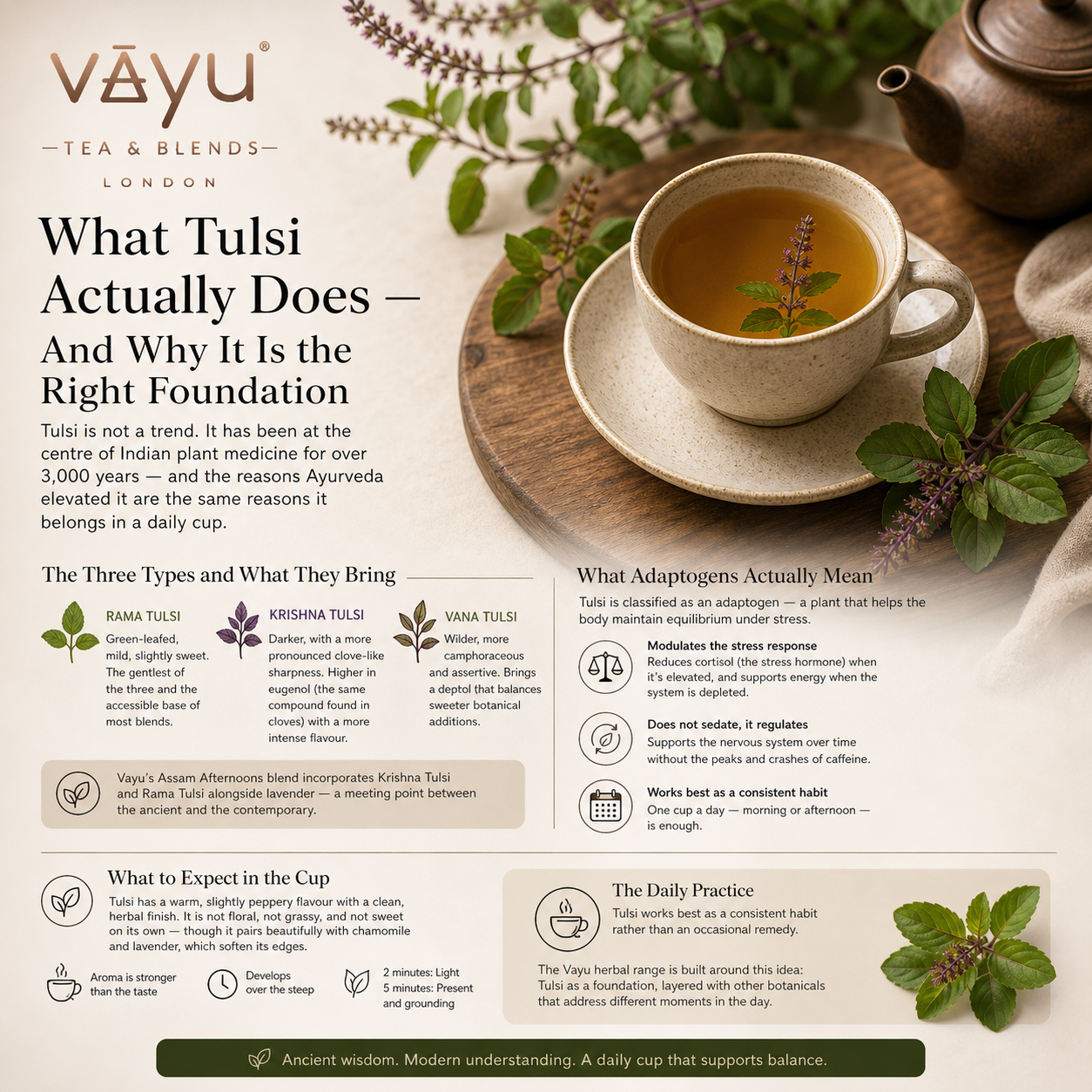
The Vayu herbal range is designed to make that easy. Tulsi with Ashwagandha and Moringa in the morning. Turmeric and Fennel in the afternoon. Ginger and Liquorice when the body needs warmth and support.
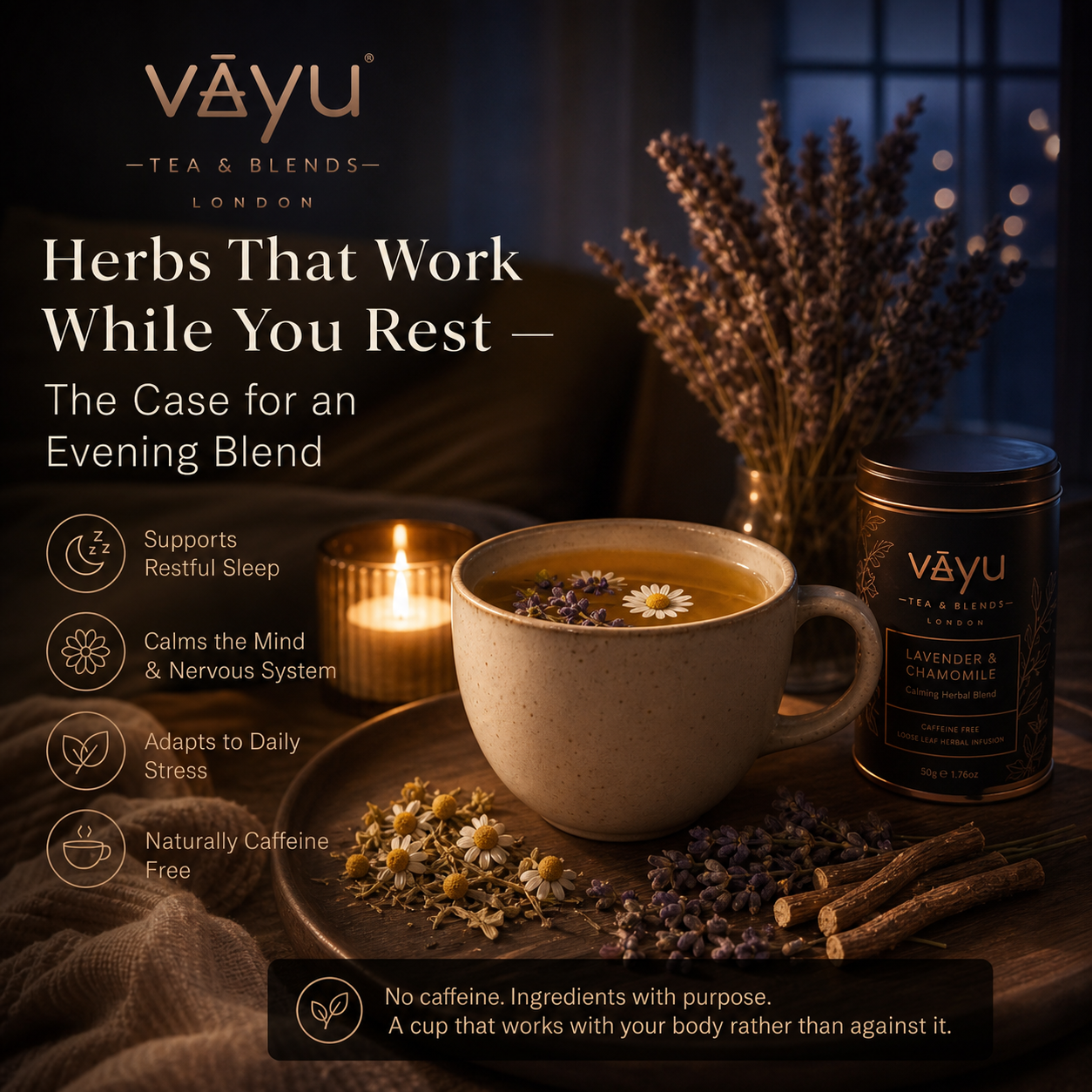
Caffeine-free. Built from ingredients with a purpose.
The Honest Position
Tea is not medicine. But the herbs in a well-made cup have real properties, used purposefully for thousands of years across cultures that understood plant ingredients far better than most modern wellness marketing does.
Drinking them daily, with some understanding of what they do, is a small and meaningful contribution to health.
That is what Vayu's herbal range is for.